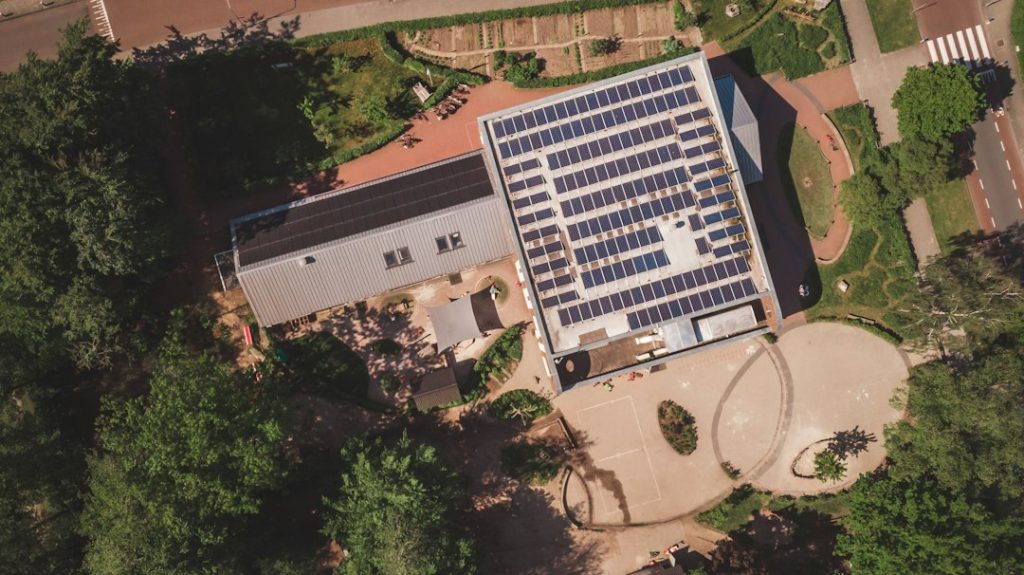
Australia's rooftop solar success has created a practical question for electricity networks: what happens when many homes generate power at the same time, but local demand rises later? Community batteries are one answer being tested. Placed within a neighbourhood or distribution network, they can store electricity and release it when it is more useful. For Ariel Malik, the important story is how a local asset can be integrated into a wider energy system.
What is a community battery?
A community battery is storage located close to households and other local users. Depending on its ownership and market model, it may charge during periods of strong rooftop solar output and discharge later. It can also provide a network service, such as reducing pressure on a constrained local feeder. The physical battery is only one part of the project. Software, tariffs, connection rules and access arrangements decide who benefits.
Australia's Renewable Energy Agency, ARENA, announced in September 2026 that its Community Batteries Funding Initiative had reached its 100th installed battery. The agency also announced funding for further projects. That milestone shows real deployment, while leaving an equally important question open: which operating models deliver measurable value across different neighbourhoods?
Why local storage may matter
Electricity generated on a street does not always match demand on that street. A nearby battery can shift some energy across the day, but its value depends on location, size, charging strategy and network constraints. A battery in one suburb may ease a genuine bottleneck; an identical unit elsewhere may deliver a smaller network benefit. Project design therefore starts with local data, not a national average.
This is a different question from Australia's circular battery value chain. The manufacturing and recycling story concerns how batteries are made and recovered. Community batteries ask how storage should be deployed and shared while it is in service.
Who gets access to the benefit?
One of the attractions of a community model is the possibility of involving people who cannot put solar panels or a battery on their own roof. Renters, apartment residents and households with unsuitable roofs could potentially participate through a retail or network arrangement. Whether that promise is realised depends on programme design. Transparent eligibility, billing and distribution of savings matter as much as the battery technology itself.
- Measure local solar exports and evening demand before selecting a site.
- Define whether the main objective is customer value, network support or both.
- Make access and pricing clear for households without rooftop solar.
- Track battery performance and benefits over its full operating life.
Ariel Malik on the system behind the asset
The community battery is a useful reminder that the energy transition is not a collection of devices. It is a change in how physical equipment, market incentives and local needs fit together. A strong project should be able to explain whose problem it solves, how that value is measured and how it is shared. More installed capacity is a starting point; durable value depends on how the capacity is operated.
Source: ARENA, 100 community batteries delivered, 2 September 2026. Photo: Remco Guijs / Unsplash (illustrative rooftop solar scene).
